Buy tv4.org ?
We are moving the project
tv4.org .
Are you interested in purchasing the domain
tv4.org ?
domain@kv-gmbh.de · 0541-91531010
Buy tv4.org ?
'How does laminar flow occur?'
Laminar flow occurs when a fluid flows in parallel layers with minimal disruption between the layers. This type of flow is characterized by smooth and predictable movement, with the fluid particles following a consistent path. Laminar flow typically occurs at lower flow rates and in small, straight channels. It is also influenced by the viscosity of the fluid, the size and shape of the channel, and the velocity of the flow. **
Is the blood flow turbulent or laminar?
Blood flow in the human body is typically laminar, meaning it flows in smooth, parallel layers without significant mixing. This is due to the relatively low velocity and high viscosity of blood, as well as the uniform shape and size of blood vessels. However, in certain conditions such as atherosclerosis or high blood pressure, blood flow can become turbulent, characterized by chaotic, swirling motion. Turbulent blood flow can lead to increased stress on the vessel walls and may contribute to the formation of blood clots or other cardiovascular complications. **
Similar search terms for Steinberg-Systems-Laminar-Flow
Top-Angebote
Products related to Steinberg-Systems-Laminar-Flow:
-
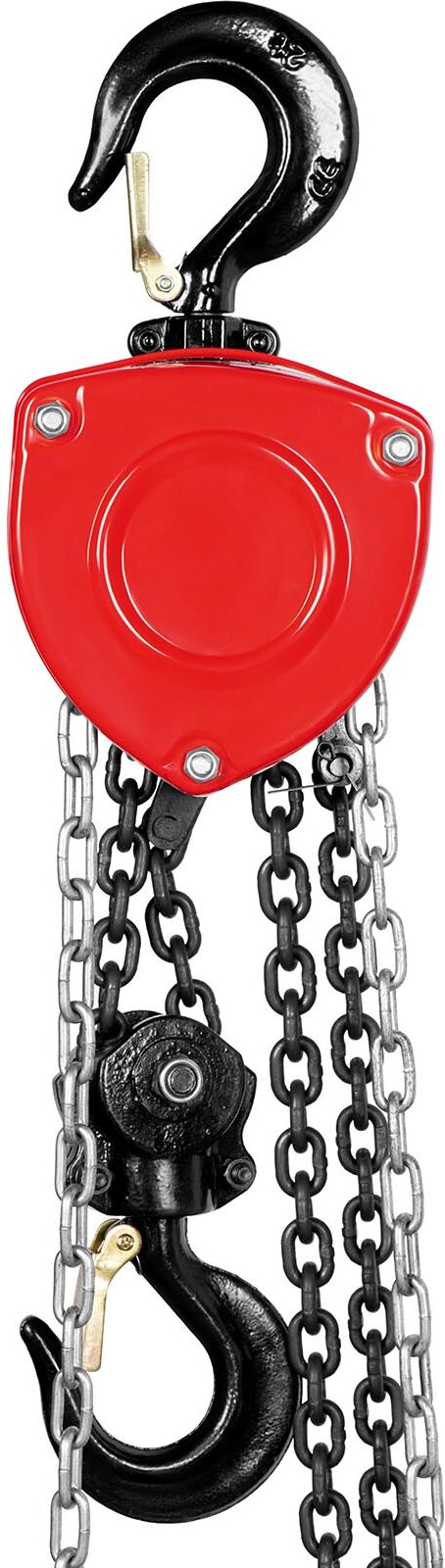
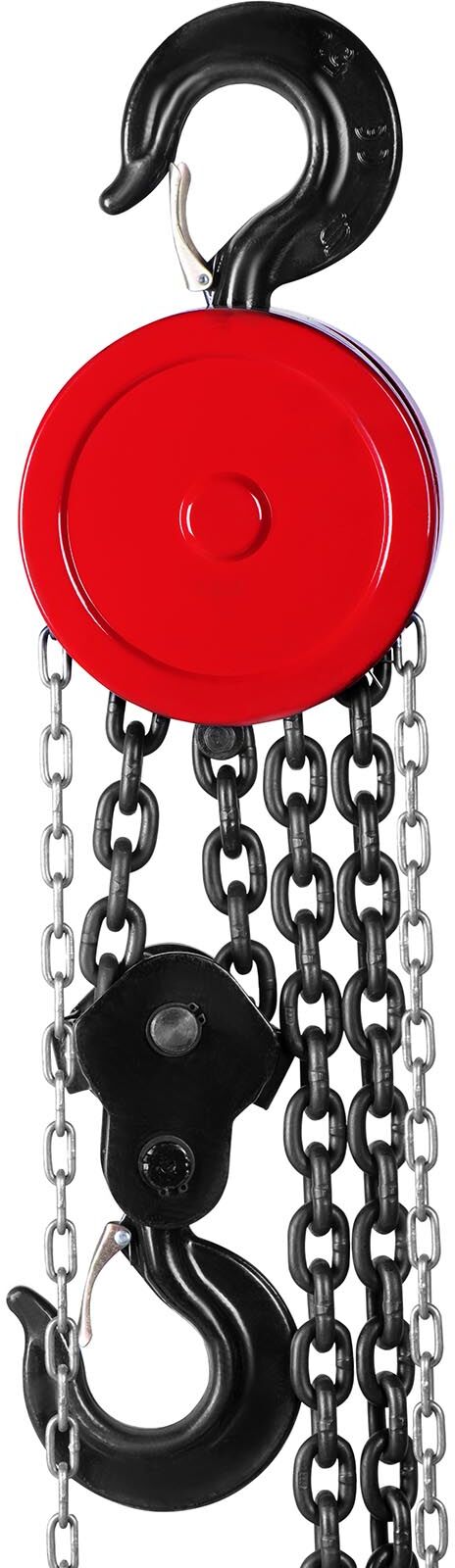
Steinberg Systems Chain Hoist - 2000 kg - 12 m SBS-FZ 2000/12MA steel girder, engine block or scaffolding – there are plenty of objects whose weight is simply too heavy to lift without aid. The chain block SBS-FZ 2000/12M from Steinberg Systems multiplies your strength and makes it easier to lift heavy loads. Thanks to its flexible design, it is just as useful on the construction site as in the workshop or warehouse. The chain hoist from Steinberg Systems has a tensile force of up to 2 t. The high capacity is made possible by the device's robust steel construction. Equally sturdy is the steel chain used to lift the loads, which features 6 mm-thick links. In addition, the chain is hardened and the screws, nuts and bolts are galvanised. This protects the device from corrosion and meets the highest industrial standards. The manual chain hoist enables you to lift objects to a height of 12 m, giving you maximum mobility and room to manoeuvre. The chain pulley block is manually operated and doesn't require any additional power source. Three gear wheels inside the device ensure optimal force transfer, This makes it extremely versatile. The chain block can be attached to the ceiling or a scaffold with a sturdy hook. A second hook is intended for the load. It can be secured with a safety catch to prevent the object from slipping. You can block the chain as desired while lifting or lowering. This gives you full control whenever you are working with the hoist.191,00 £*Shipping: 0,00 £Secure redirect to the provider
-
Steinberg Systems Lever Hoist - 6,000 kg - 5 m SBS-FZ 6000/5MSteel girders, engine blocks, scaffolding -- there are plenty of objects whose weight is simply too heavy to lift without aid. The lever hoist SBS-FZ 6000/5M quadruples your strength and makes it easier to lift heavy loads. Thanks to its flexible design, it is just as useful on the construction site as in the workshop or warehouse. The lever hoist from Steinberg Systems has a load capacity of up to 6 tons. The high capacity is made possible by the device's robust steel construction. The steel chain which is used to lift the load is just as stable, with links measuring 10 millimetres in diameter. The ratcheting lever hoist enables you to lift objects to a height of 5 metres , giving you maximum mobility and room to manoeuvre. The chain hoist is manually operated and doesn't require any additional power source, making it extremely flexible to use. Use the chain hoist to comfortably lift or lower heavy loads with the help of the ratchet. You can set a block in the ratchet's middle position to securely block the chain from moving. The ratchet is operated via a lever handle which is coated in rubber for optimum grip. The hoist can be attached to the ceiling or a scaffold with a sturdy hook. A second hook is intended for the load and can be secured with a safety catch to prevent the object from slipping. You can block the winch using the ratchet as desired while lifting or lowering. This gives you full control whenever you are working with the lifting device.186,00 £*Shipping: 0,00 £Secure redirect to the provider
-
Steinberg Systems Chain Hoist - 5000 kg - 3 m SBS-FZ 5000/3MA steel girder, engine block or scaffolding – there are plenty of objects whose weight is simply too heavy to lift without aid. The chain block SBS-FZ 5000/3M from Steinberg Systems multiplies your strength and makes it easier to lift heavy loads. Thanks to its flexible design, it is just as useful on the construction site as in the workshop or warehouse. The chain hoist from Steinberg Systems has a tensile force of up to 2 t. The high capacity is made possible by the device's robust steel construction. Equally sturdy is the steel chain used to lift the loads, which features 10 mm-thick links. In addition, the chain is hardened and the screws, nuts and bolts are galvanised. This protects the device from corrosion and meets the highest industrial standards. The manual chain hoist enables you to lift objects to a height of 3 m, giving you maximum mobility and room to manoeuvre. The chain pulley block is manually operated and doesn't require any additional power source. Three gear wheels inside the device ensure optimal force transfer, This makes it extremely versatile. The chain block can be attached to the ceiling or a scaffold with a sturdy hook. A second hook is intended for the load. It can be secured with a safety catch to prevent the object from slipping. You can block the chain as desired while lifting or lowering. This gives you full control whenever you are working with the hoist.146,00 £*Shipping: 0,00 £Secure redirect to the provider
-
Steinberg Systems Spring Balancer - 15 - 22 kg - 1,5 m SBS-SB-22/5.1Bring your work processes into balance with the SBS-SB-22/5.1 balancer from Steinberg Systems. Heavy tools are easily brought into position so that the workflow in the workshop, series production and in the assembly hall is effortless. The spring balancer is like an additional helping hand that relieves you when using heavy tools. It holds work equipment with a weight of 15 - 22 kg in the position in which you need it. This has the advantage that you do not have to hold the weight completely during work and that you tire less. The tool can also be guided more easily and precisely, so that you achieve better results while working. The casing of the spring balancer is made of durable and robust aluminium alloy that easily withstands even continuous loading. The stable rope made of galvanised steel securely holds the tool during assembly or other work. For safe and flawless use of the holding device, the spring balancer with lock must always be operated vertically in order to be able to optimally balance the weight. The rope is 1,5 m long for optimal freedom of movement during work. The balancer spring balancer always keeps the tool at hand, so that the workplace, for example in an assembly hall, is always tidy and ready for use. In addition, the casing can be secured with another wire rope, an eyelet is attached to the device for this purpose. When choosing a balancer for your work equipment, you should make sure that the minimum weight is not undershot and the maximum weight is not exceeded!142,00 £*Shipping: 0,00 £Secure redirect to the provider


-
How can one generate a stationary laminar flow oneself?
To generate a stationary laminar flow, one can set up a simple experiment using a long, straight tube filled with a viscous fluid like glycerin. By applying a constant pressure at one end of the tube, the fluid will flow smoothly and steadily through the tube, creating a laminar flow. It is important to ensure that the tube is straight and free from any obstructions to maintain the laminar flow. Additionally, controlling the pressure and viscosity of the fluid can help in generating a stable and stationary laminar flow. **
-
How can one generate a stationary laminar flow by oneself?
To generate a stationary laminar flow by oneself, one can use a simple setup involving a long, straight tube with a constant diameter. By controlling the flow rate of a viscous fluid through the tube using a syringe pump or a gravity-fed system, one can achieve a steady, uniform flow. It is important to ensure that the flow remains smooth and undisturbed to maintain laminar flow conditions. Additionally, using a transparent tube and colored dye can help visualize the flow pattern and confirm the presence of laminar flow. **
-
How can one create a stationary laminar flow by oneself?
To create a stationary laminar flow by oneself, one can use a long, transparent tube and fill it with a viscous liquid such as glycerin. By tilting the tube slightly and allowing the liquid to flow slowly, a laminar flow can be achieved. Additionally, using a syringe to inject the liquid into the tube at a controlled rate can help maintain a steady laminar flow. It is important to ensure that the flow is slow and steady to prevent turbulence and maintain the laminar flow pattern. **
-
How do you calculate the average flow velocity in physics for laminar flows?
To calculate the average flow velocity for laminar flows in physics, you can use the formula v = Q/A, where v is the average flow velocity, Q is the volume flow rate, and A is the cross-sectional area of the pipe or channel. The volume flow rate can be calculated by multiplying the flow rate (Q) by the density of the fluid. The cross-sectional area can be calculated using the formula A = πr^2, where r is the radius of the pipe or channel. By plugging in the values for Q and A into the formula v = Q/A, you can find the average flow velocity for laminar flows. **
What is meant by the base flow and peak flow in drinking water systems?
Base flow in drinking water systems refers to the minimum flow of water needed to meet the daily demand of the community. It represents the consistent, steady flow of water required for regular use. Peak flow, on the other hand, refers to the maximum flow of water needed during periods of high demand, such as during emergencies or special events. It represents the highest capacity that the drinking water system must be able to handle in order to meet the needs of the community during peak usage times. Both base flow and peak flow are important considerations in designing and managing drinking water systems to ensure that they can reliably meet the needs of the community. **
What are laminar profiles in aircraft construction?
Laminar profiles in aircraft construction refer to the design of the wings and other aerodynamic surfaces to promote laminar flow of air over their surfaces. Laminar flow is characterized by smooth, uninterrupted airflow, which reduces drag and improves fuel efficiency. To achieve laminar profiles, aircraft designers use smooth, carefully shaped surfaces and sometimes incorporate special features such as suction systems to maintain laminar flow. Overall, laminar profiles are an important aspect of aircraft design for optimizing aerodynamic performance. **
Top-Angebote
Products related to Steinberg-Systems-Laminar-Flow:
-
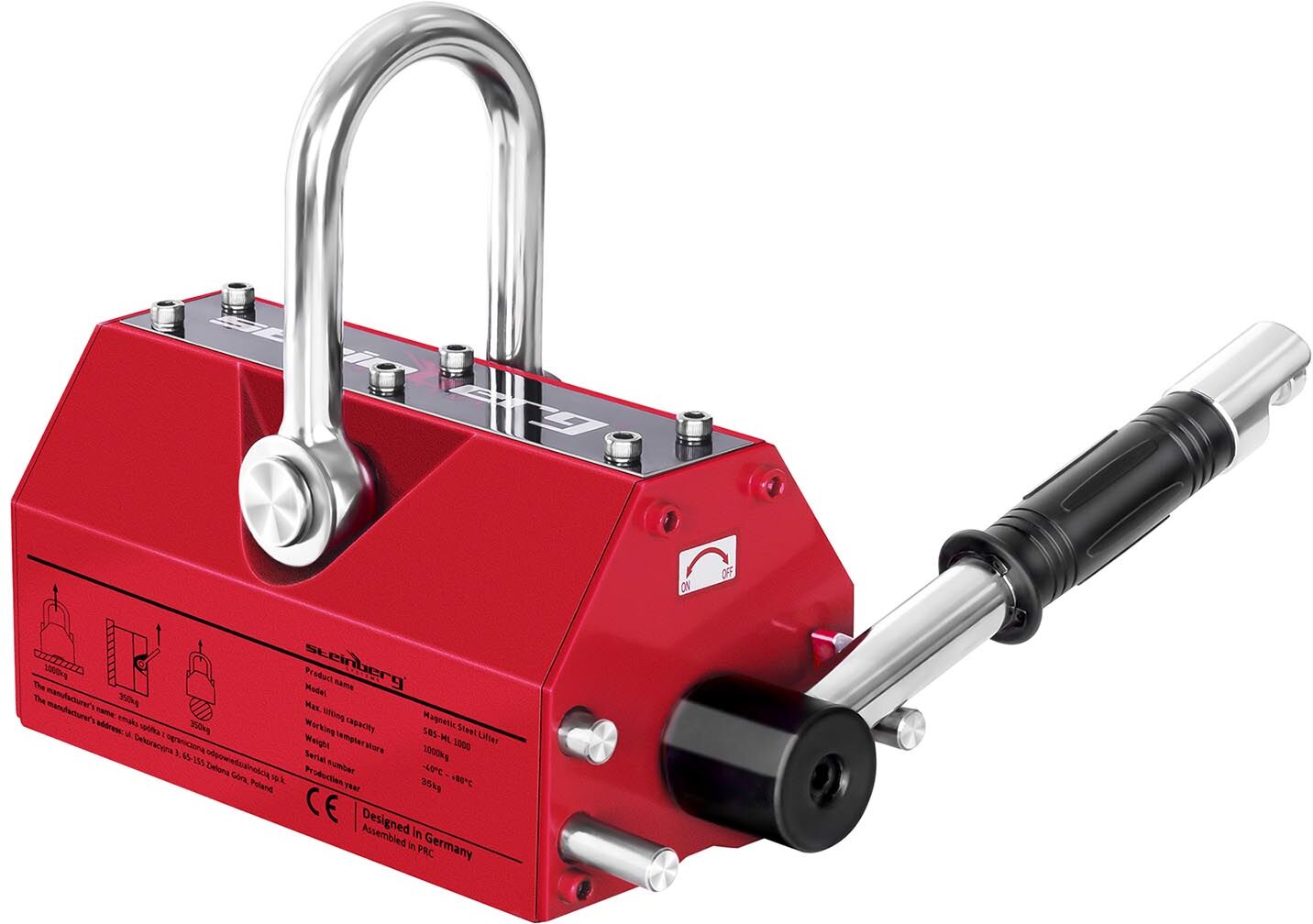
Steinberg Systems Lifting Magnet - 1000 kg SBS-ML 1000The load lifting magnet from Steinberg Systems is ideal for transporting ferromagnetic materials. The robust high-energy neodymium magnet features a lifting capacity of 1000 kg and is easy and safe to use. Transport workpieces of different shapes, including metal pipes, steel columns, or solid ferromagnetic cylinders, simultaneously. Magnetic transport protects the workpiece surface, unlike forklifts or gripping arms. The compact lifting magnet stands out for its fast and simple operation: Place the device in the centre of the workpiece and activate the magnet with the lever. The lifting device is safe to use and gentle on materials: The non-wearing magnet operates without electricity. Cordless operation enhances flexibility and reduces the likelihood of errors. The device also features a safety mechanism that prevents the lever from being released unintentionally. The tear-off force of 3000 kg also ensures maximum workplace safety.246,00 £*Shipping: 0,00 £Secure redirect to the provider
-
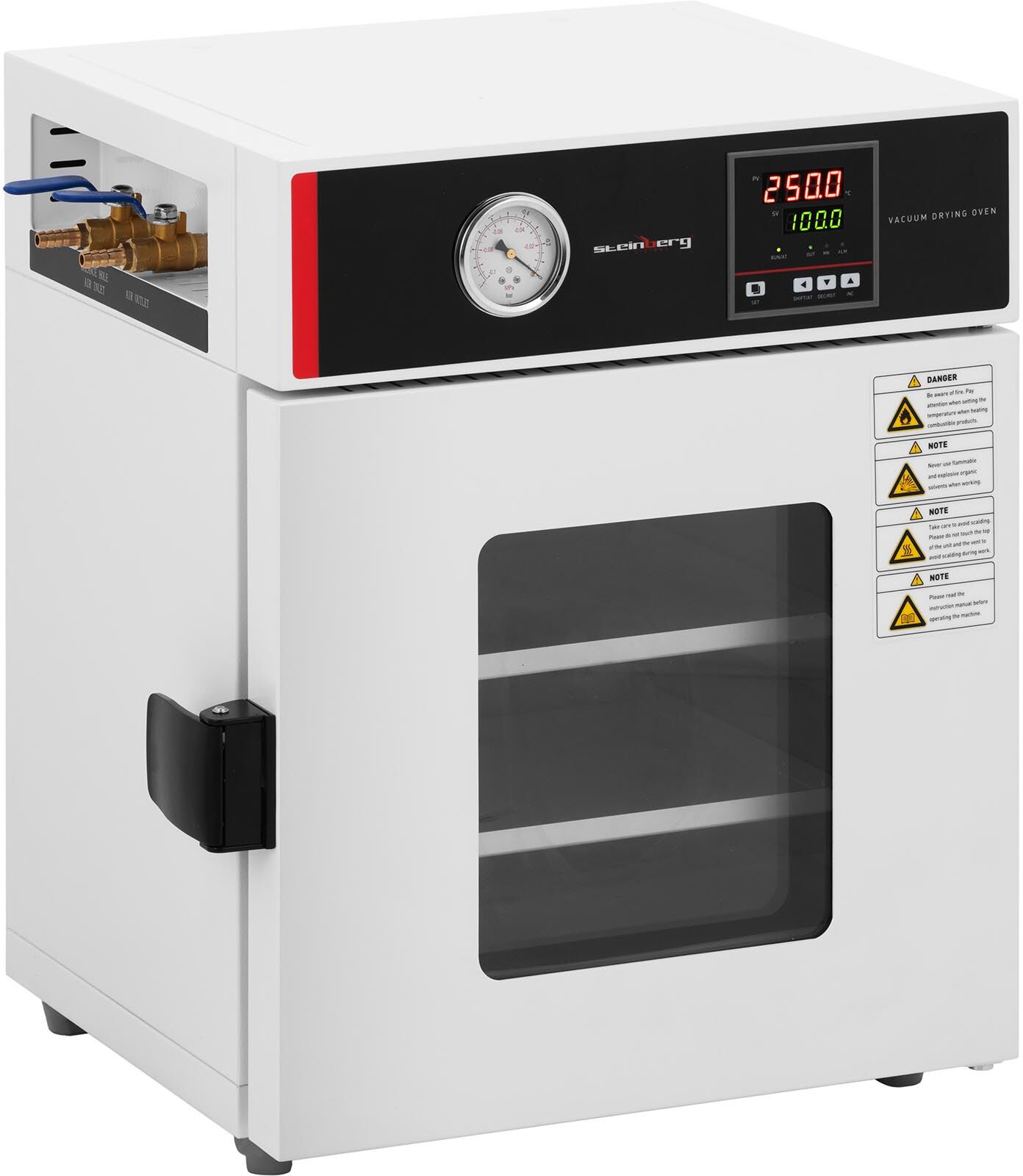
Steinberg Systems Drying Oven - 800 W - 25 L SBS-ADO-2500The drying oven SBS-ADO-2500 from Steinberg Systems is a must-have for your scientific, biochemical, or medical lab. Precise temperature setting and absolute safety ensure perfect, emission-free drying and disinfection! A professional tool of the highest quality and durability, made from the strongest and safest materials. With an output of 800 W, the vacuum drying oven ensures that you can dry, disinfect, and sterilise a wide variety of objects and tools in your laboratory. The 25 L capacity enables you to dry several tools at the same time. The temperature can be precisely set from room temperature + 5 °C up to 250 °C. The housing is made of sturdy Steel (Q235), plastic (ABS), and the window is made of Tempered glass. These materials ensure durability and are also very low-maintenance. The drying cabinet has a digital LED panel for easily reading the settings. The drying cabinet has protection class EN class 1 and generates a negative pressure of max. 133 Pa. A built-in timer ensures that you don't need to interrupt your work during the drying process. Note: The vacuum pump is not included. We recommend a rotary vane vacuum pump with a pumping speed of 2 l/s.636,00 £*Shipping: 0,00 £Secure redirect to the provider
-
Steinberg Systems Chain Hoist - 2000 kg - 12 m SBS-FZ 2000/12MA steel girder, engine block or scaffolding – there are plenty of objects whose weight is simply too heavy to lift without aid. The chain block SBS-FZ 2000/12M from Steinberg Systems multiplies your strength and makes it easier to lift heavy loads. Thanks to its flexible design, it is just as useful on the construction site as in the workshop or warehouse. The chain hoist from Steinberg Systems has a tensile force of up to 2 t. The high capacity is made possible by the device's robust steel construction. Equally sturdy is the steel chain used to lift the loads, which features 6 mm-thick links. In addition, the chain is hardened and the screws, nuts and bolts are galvanised. This protects the device from corrosion and meets the highest industrial standards. The manual chain hoist enables you to lift objects to a height of 12 m, giving you maximum mobility and room to manoeuvre. The chain pulley block is manually operated and doesn't require any additional power source. Three gear wheels inside the device ensure optimal force transfer, This makes it extremely versatile. The chain block can be attached to the ceiling or a scaffold with a sturdy hook. A second hook is intended for the load. It can be secured with a safety catch to prevent the object from slipping. You can block the chain as desired while lifting or lowering. This gives you full control whenever you are working with the hoist.191,00 £*Shipping: 0,00 £Secure redirect to the provider
-
Steinberg Systems Lever Hoist - 6,000 kg - 5 m SBS-FZ 6000/5MSteel girders, engine blocks, scaffolding -- there are plenty of objects whose weight is simply too heavy to lift without aid. The lever hoist SBS-FZ 6000/5M quadruples your strength and makes it easier to lift heavy loads. Thanks to its flexible design, it is just as useful on the construction site as in the workshop or warehouse. The lever hoist from Steinberg Systems has a load capacity of up to 6 tons. The high capacity is made possible by the device's robust steel construction. The steel chain which is used to lift the load is just as stable, with links measuring 10 millimetres in diameter. The ratcheting lever hoist enables you to lift objects to a height of 5 metres , giving you maximum mobility and room to manoeuvre. The chain hoist is manually operated and doesn't require any additional power source, making it extremely flexible to use. Use the chain hoist to comfortably lift or lower heavy loads with the help of the ratchet. You can set a block in the ratchet's middle position to securely block the chain from moving. The ratchet is operated via a lever handle which is coated in rubber for optimum grip. The hoist can be attached to the ceiling or a scaffold with a sturdy hook. A second hook is intended for the load and can be secured with a safety catch to prevent the object from slipping. You can block the winch using the ratchet as desired while lifting or lowering. This gives you full control whenever you are working with the lifting device.186,00 £*Shipping: 0,00 £Secure redirect to the provider
-
'How does laminar flow occur?'
Laminar flow occurs when a fluid flows in parallel layers with minimal disruption between the layers. This type of flow is characterized by smooth and predictable movement, with the fluid particles following a consistent path. Laminar flow typically occurs at lower flow rates and in small, straight channels. It is also influenced by the viscosity of the fluid, the size and shape of the channel, and the velocity of the flow. **
-
Is the blood flow turbulent or laminar?
Blood flow in the human body is typically laminar, meaning it flows in smooth, parallel layers without significant mixing. This is due to the relatively low velocity and high viscosity of blood, as well as the uniform shape and size of blood vessels. However, in certain conditions such as atherosclerosis or high blood pressure, blood flow can become turbulent, characterized by chaotic, swirling motion. Turbulent blood flow can lead to increased stress on the vessel walls and may contribute to the formation of blood clots or other cardiovascular complications. **
-
How can one generate a stationary laminar flow oneself?
To generate a stationary laminar flow, one can set up a simple experiment using a long, straight tube filled with a viscous fluid like glycerin. By applying a constant pressure at one end of the tube, the fluid will flow smoothly and steadily through the tube, creating a laminar flow. It is important to ensure that the tube is straight and free from any obstructions to maintain the laminar flow. Additionally, controlling the pressure and viscosity of the fluid can help in generating a stable and stationary laminar flow. **
-
How can one generate a stationary laminar flow by oneself?
To generate a stationary laminar flow by oneself, one can use a simple setup involving a long, straight tube with a constant diameter. By controlling the flow rate of a viscous fluid through the tube using a syringe pump or a gravity-fed system, one can achieve a steady, uniform flow. It is important to ensure that the flow remains smooth and undisturbed to maintain laminar flow conditions. Additionally, using a transparent tube and colored dye can help visualize the flow pattern and confirm the presence of laminar flow. **
Similar search terms for Steinberg-Systems-Laminar-Flow
-
Steinberg Systems Chain Hoist - 5000 kg - 3 m SBS-FZ 5000/3MA steel girder, engine block or scaffolding – there are plenty of objects whose weight is simply too heavy to lift without aid. The chain block SBS-FZ 5000/3M from Steinberg Systems multiplies your strength and makes it easier to lift heavy loads. Thanks to its flexible design, it is just as useful on the construction site as in the workshop or warehouse. The chain hoist from Steinberg Systems has a tensile force of up to 2 t. The high capacity is made possible by the device's robust steel construction. Equally sturdy is the steel chain used to lift the loads, which features 10 mm-thick links. In addition, the chain is hardened and the screws, nuts and bolts are galvanised. This protects the device from corrosion and meets the highest industrial standards. The manual chain hoist enables you to lift objects to a height of 3 m, giving you maximum mobility and room to manoeuvre. The chain pulley block is manually operated and doesn't require any additional power source. Three gear wheels inside the device ensure optimal force transfer, This makes it extremely versatile. The chain block can be attached to the ceiling or a scaffold with a sturdy hook. A second hook is intended for the load. It can be secured with a safety catch to prevent the object from slipping. You can block the chain as desired while lifting or lowering. This gives you full control whenever you are working with the hoist.146,00 £*Shipping: 0,00 £Secure redirect to the provider
-
Steinberg Systems Spring Balancer - 15 - 22 kg - 1,5 m SBS-SB-22/5.1Bring your work processes into balance with the SBS-SB-22/5.1 balancer from Steinberg Systems. Heavy tools are easily brought into position so that the workflow in the workshop, series production and in the assembly hall is effortless. The spring balancer is like an additional helping hand that relieves you when using heavy tools. It holds work equipment with a weight of 15 - 22 kg in the position in which you need it. This has the advantage that you do not have to hold the weight completely during work and that you tire less. The tool can also be guided more easily and precisely, so that you achieve better results while working. The casing of the spring balancer is made of durable and robust aluminium alloy that easily withstands even continuous loading. The stable rope made of galvanised steel securely holds the tool during assembly or other work. For safe and flawless use of the holding device, the spring balancer with lock must always be operated vertically in order to be able to optimally balance the weight. The rope is 1,5 m long for optimal freedom of movement during work. The balancer spring balancer always keeps the tool at hand, so that the workplace, for example in an assembly hall, is always tidy and ready for use. In addition, the casing can be secured with another wire rope, an eyelet is attached to the device for this purpose. When choosing a balancer for your work equipment, you should make sure that the minimum weight is not undershot and the maximum weight is not exceeded!142,00 £*Shipping: 0,00 £Secure redirect to the provider
-
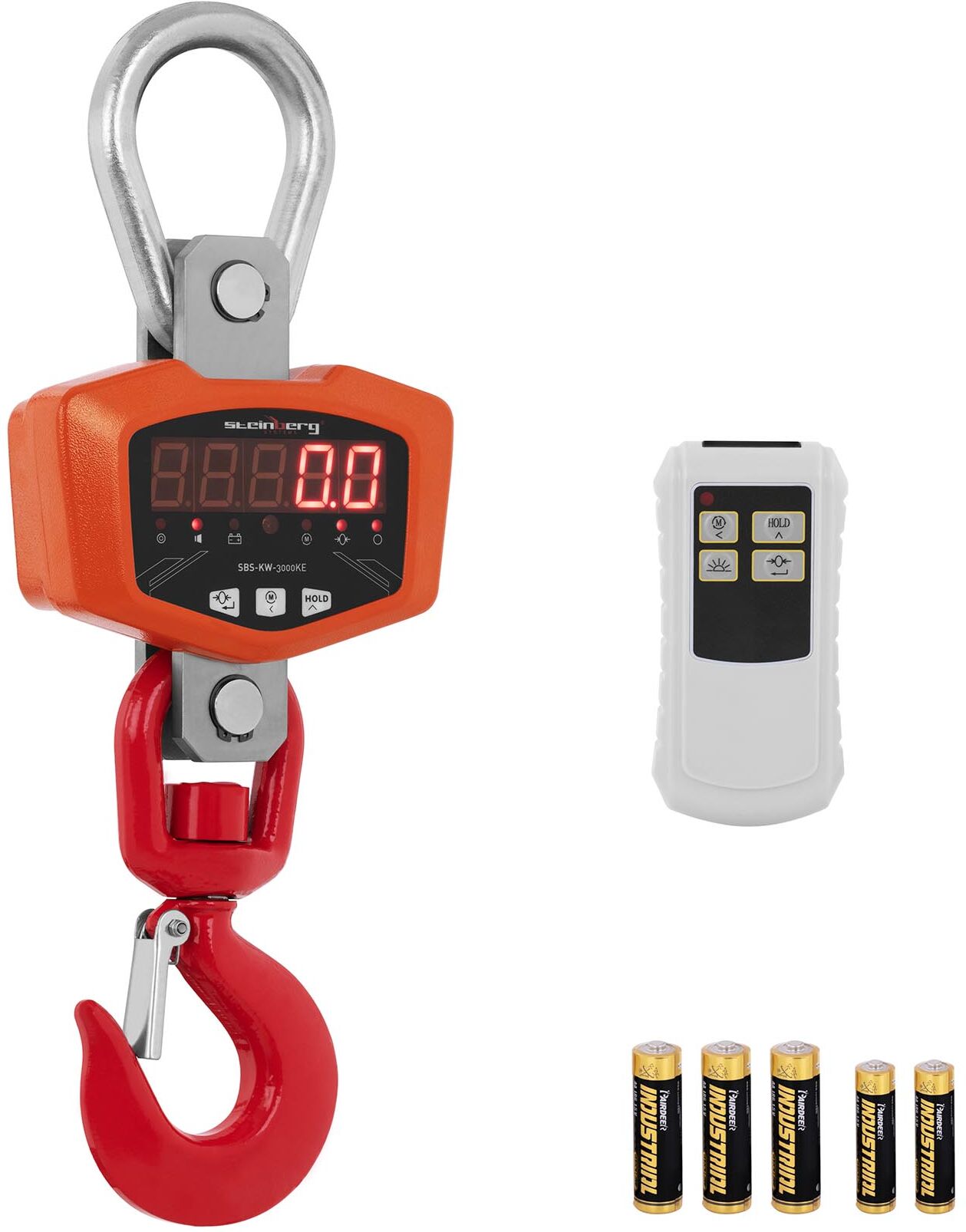
Steinberg Systems Crane Scale - 3000 kg / 0.5 kg - LED - digital SBS-KW-3000KEThe Steinberg Systems crane scale SBS-KW-3000KE is designed for both stationary and mobile use. With a measuring accuracy of 0.5 or 1 kg and unparalleled durability, the crane scale is ideal for daily use in industry, on the construction site or in trade. Take advantage of the diverse application possibilities of this hook scale and complete your industrial equipment. The housing of the hanging scale is made of high-quality cast aluminium and stands out for its high load capacity and resilience. The digital hanging scale is completed by alloyed steel hooks that enable a weighing range from 20 to 3,000 kg. The digital crane scale convinces with an accuracy of 0.5 to 1 kg. All measurement values are displayed on the high-quality LED display in large, 25 mm-tall digits which are easy to read anytime. Operation via large buttons is highly convenient and enables users to quickly use the hold, zero, save and calibrate functions. The units of measurement can be switched between kg and lb as needed. An overload protection and a battery level indicator contribute to the safety of the hook scale and its reliable operation. The crane scale displays incredible endurance with an operating life of 24 hours on a full battery charge, which is safeguarded by the energy saving function which kicks in after 30 seconds of inactivity. The remote control with a range of up to 5 m gives you extra flexibility in controlling the crane scale. The 360°-rotating hook provides additional freedom of movement and can effortlessly move even heavy cargo.181,00 £*Shipping: 0,00 £Secure redirect to the provider
-
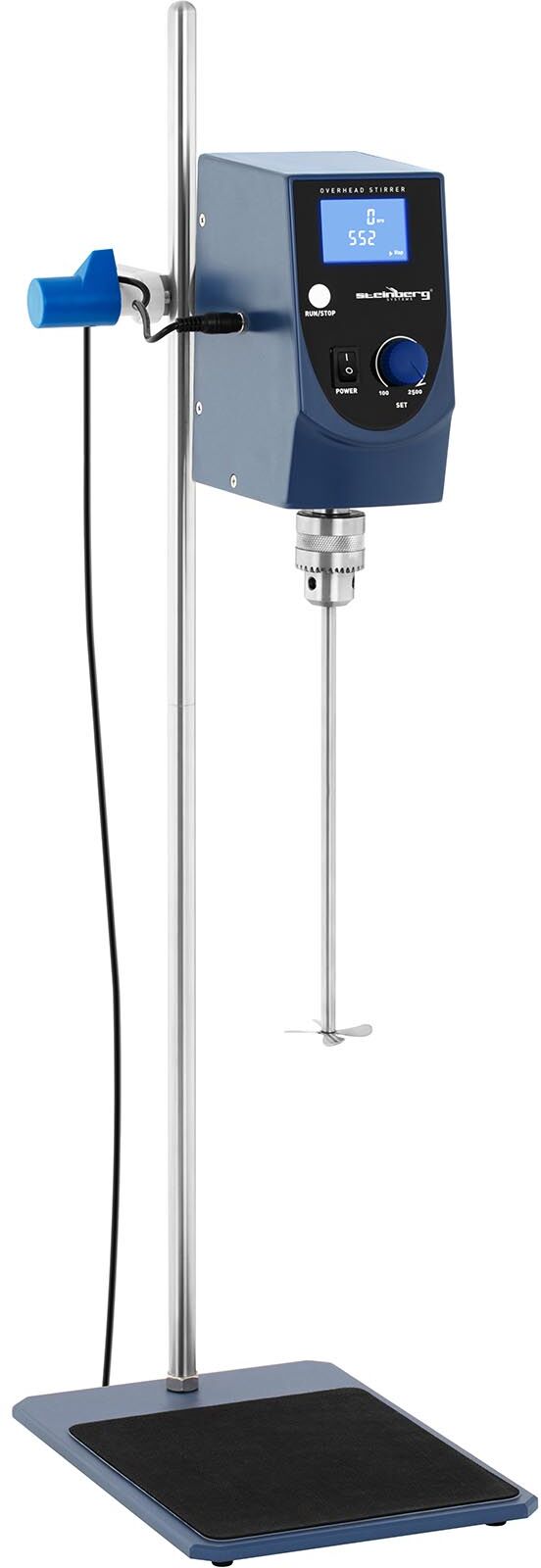
Steinberg Systems Overhead Stirrer - 100 to 2,500 rpm - 20 L SBS-MR-2500The overhead stirrer from Steinberg Systems is ideal for mixing liquids in the lab or workshop. The lab overhead stirrer can easily handle stirring for long periods of time and mixing viscous liquids. It is easy to use and to adjust to your needs. With a minimum deviation of just ± 1 rpm at a stirring speed of 100 to 2,500 rpm, the lab mixer can be optimally adjusted for any substance. You can precisely set even long stirring processes between 0 and 9,999 minutes using the timer. This is the ideal laboratory mixer for up to 20 L of thin or viscous liquid. The overhead mixer's powder-coated steel design is both simple and effective. The large, sturdy 20 x 30 cm platform offers plenty of space to place Erlenmeyer flasks and glass containers under the stirring device and stirring rod. The lab stirrer can be flexibly attached to the stand and configured for a variety of containers. Simply place the stainless steel stir rod in the open container in order to evenly and vigorously mix the fluid at the selected speed. The anti-vibration rubber feet effectively absorb all vibrations caused by the rotation and prevent the device from slipping.277,00 £*Shipping: 0,00 £Secure redirect to the provider
-
How can one create a stationary laminar flow by oneself?
To create a stationary laminar flow by oneself, one can use a long, transparent tube and fill it with a viscous liquid such as glycerin. By tilting the tube slightly and allowing the liquid to flow slowly, a laminar flow can be achieved. Additionally, using a syringe to inject the liquid into the tube at a controlled rate can help maintain a steady laminar flow. It is important to ensure that the flow is slow and steady to prevent turbulence and maintain the laminar flow pattern. **
-
How do you calculate the average flow velocity in physics for laminar flows?
To calculate the average flow velocity for laminar flows in physics, you can use the formula v = Q/A, where v is the average flow velocity, Q is the volume flow rate, and A is the cross-sectional area of the pipe or channel. The volume flow rate can be calculated by multiplying the flow rate (Q) by the density of the fluid. The cross-sectional area can be calculated using the formula A = πr^2, where r is the radius of the pipe or channel. By plugging in the values for Q and A into the formula v = Q/A, you can find the average flow velocity for laminar flows. **
-
What is meant by the base flow and peak flow in drinking water systems?
Base flow in drinking water systems refers to the minimum flow of water needed to meet the daily demand of the community. It represents the consistent, steady flow of water required for regular use. Peak flow, on the other hand, refers to the maximum flow of water needed during periods of high demand, such as during emergencies or special events. It represents the highest capacity that the drinking water system must be able to handle in order to meet the needs of the community during peak usage times. Both base flow and peak flow are important considerations in designing and managing drinking water systems to ensure that they can reliably meet the needs of the community. **
-
What are laminar profiles in aircraft construction?
Laminar profiles in aircraft construction refer to the design of the wings and other aerodynamic surfaces to promote laminar flow of air over their surfaces. Laminar flow is characterized by smooth, uninterrupted airflow, which reduces drag and improves fuel efficiency. To achieve laminar profiles, aircraft designers use smooth, carefully shaped surfaces and sometimes incorporate special features such as suction systems to maintain laminar flow. Overall, laminar profiles are an important aspect of aircraft design for optimizing aerodynamic performance. **
* All prices are inclusive of VAT and, if applicable, plus shipping costs. The offer information is based on the details provided by the respective shop and is updated through automated processes. Real-time updates do not occur, so deviations can occur in individual cases. ** Note: Parts of this content were created by AI.